
Fireplaces That Operate Without Fire Risk
Chimney Sweeping in the North Platte, NE area for homes with wood-burning fireplaces and heating systems requiring annual maintenance
Creosote forms whenever wood burns, condensing inside chimney walls as a flammable residue that thickens with each fire. McNeel Solutions removes this buildup along with soot and ash that restrict airflow and create ignition hazards throughout chimney systems in North Platte, Valentine, Sidney, and surrounding areas. Homes that burn wood regularly during Nebraska's extended heating season require sweeping to maintain safe operation before temperatures drop and fireplace use intensifies.
The sweeping process clears combustible deposits from flue liners and chimney interiors, restoring the unobstructed draft needed for efficient combustion. Neglected chimneys develop restricted airflow that causes smoke to spill into living areas and reduces heating efficiency as gases fail to exit properly.
Schedule annual chimney sweeping to address buildup before winter heating begins.
What Proper Sweeping Removes and Prevents
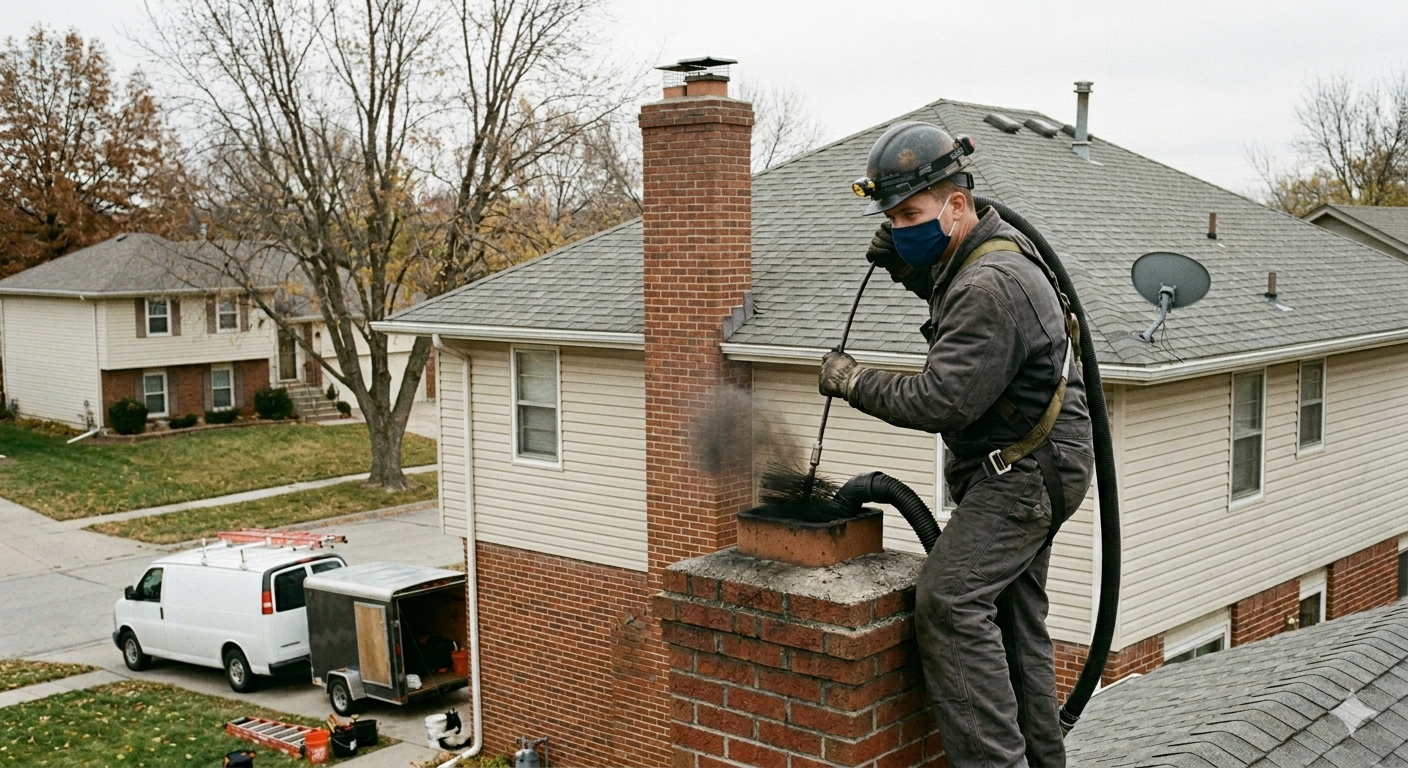
Sweeping involves inserting specialized brushes through the flue system to dislodge hardened creosote and accumulated soot from chimney walls. The process addresses three stages of creosote—from flaky deposits that brush away easily to glazed, tar-like layers that require more intensive removal methods depending on burning habits and wood moisture content.
After sweeping, fireplaces draw air more effectively and smoke rises directly up the flue without spillage into rooms. You'll notice fires ignite faster, burn cleaner, and produce less visible smoke because the system vents combustion gases as intended rather than forcing them through constricted passages.
Annual sweeping performed before heavy winter use prevents the gradual buildup that leads to chimney fires, which ignite when creosote reaches ignition temperature during hot fires. Regular service also reduces the need for emergency cleaning after blockages or performance issues develop mid-season.
Questions Homeowners Ask About Chimney Sweeping
North Platte area homeowners preparing for winter heating often ask about timing, frequency, and what sweeping addresses beyond visible soot.
McNeel Solutions provides chimney sweeping that removes accumulated deposits and restores safe venting before winter heating demands begin. Request service to prepare wood-burning systems for seasonal operation.
What does sweeping remove from chimney systems?
Sweeping removes creosote in all stages of formation, accumulated soot, ash deposits, and debris that fall into flues from deteriorating components or animal activity. The process clears obstructions that restrict airflow and create fire hazards.
How often should wood-burning fireplaces be swept?
Annual sweeping before the heating season begins ensures safe operation for typical residential use. Homes that burn wood daily or use fireplaces as primary heat sources may require sweeping more frequently depending on how quickly creosote accumulates.
Why does creosote buildup vary between chimneys?
Wood moisture content, burning temperature, and frequency of use all affect how much creosote forms. Wet or unseasoned wood produces more creosote because incomplete combustion creates heavier smoke that condenses inside cooler flue sections.
What happens if chimneys aren't swept regularly?
Creosote layers thicken over time, narrowing the flue opening and reducing draft efficiency. Accumulated deposits eventually ignite during hot fires, causing chimney fires that damage flue liners and masonry while spreading flames to structural components.
When should sweeping be scheduled in North Platte?
Late summer or early fall allows time to address any issues before consistent fireplace use begins. Scheduling before Nebraska's heating season ensures chimneys are clear when temperatures drop and wood-burning systems operate daily.