

Branches That Clear Structures and Grow Stronger
Tree Trimming in North Platte and surrounding areas for residential properties requiring clearance, hazard reduction, and healthier long-term growth
Overgrown branches scraping against siding during windstorms, deadwood accumulating in the canopy, and limbs extending over rooflines all contribute to property damage and tree decline that worsens without intervention. Tree trimming addresses these issues by removing dead, damaged, or poorly positioned branches to improve structure, reduce risks, and promote healthier growth patterns. McNeel Solutions provides professional tree trimming in North Platte, Ogallala, Kearney, and neighboring communities for homeowners managing mature trees near homes, driveways, and utility lines where routine maintenance prevents larger problems and extends tree lifespan across Nebraska's variable seasonal conditions.
Trimming focuses on removing branches that are dead, diseased, crossing and rubbing against each other, growing toward structures, or positioned where they create hazards during storms. Cuts are made at branch collars using techniques that promote proper wound closure and prevent decay from entering the tree. Trimming also addresses canopy density, allowing better air circulation and light penetration, which reduces disease pressure and encourages stronger interior branch development. The goal is to preserve the tree's natural form while eliminating risks and improving long-term health.
Schedule professional tree trimming services to address clearance concerns, remove hazardous limbs, and establish a maintenance cycle that supports tree health.
What Proper Trimming Requires
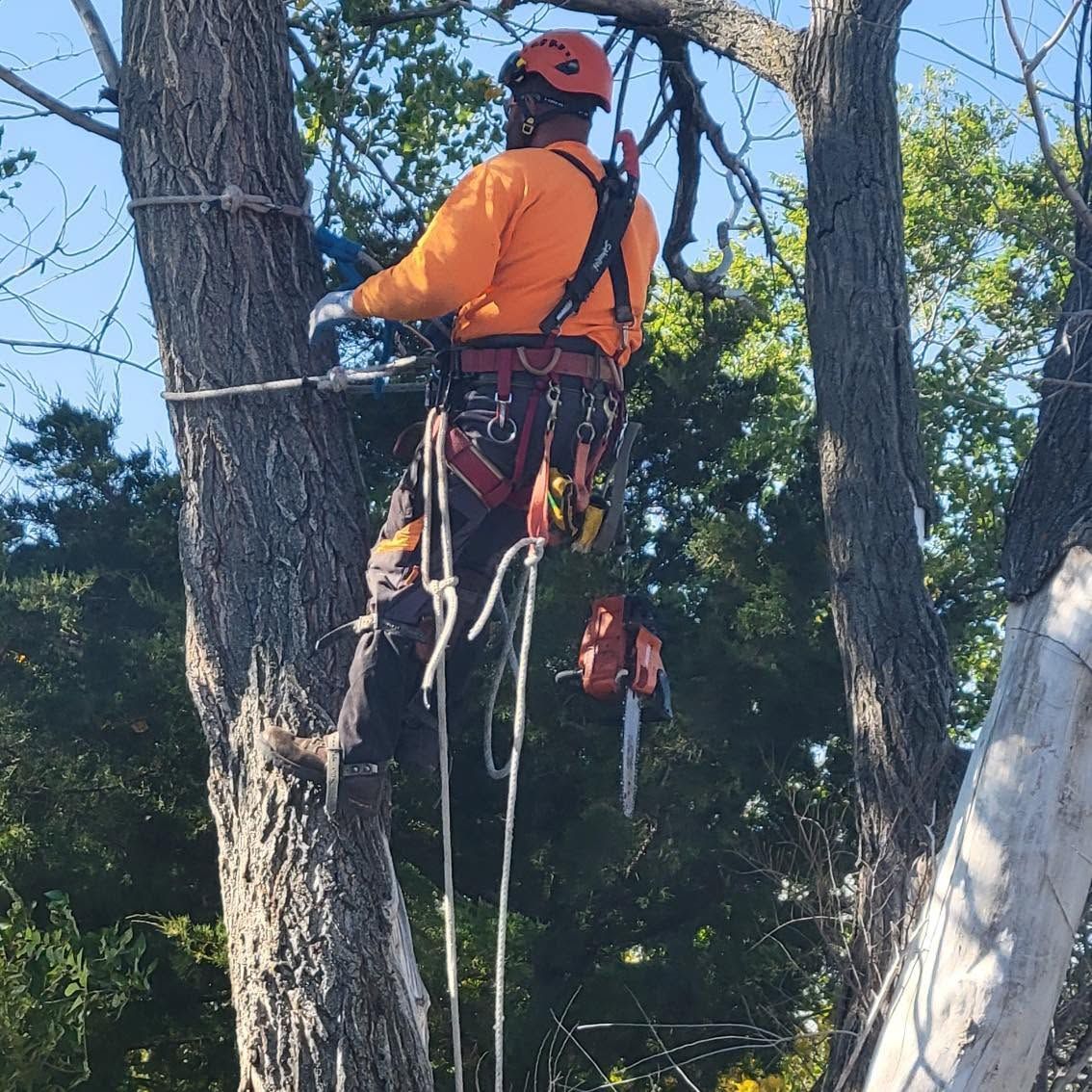
Tree trimming involves climbing or using lifts to access branches throughout the canopy, making selective cuts that remove problematic limbs without over-pruning or damaging the tree's structure. Dead and diseased branches are removed first, followed by branches creating clearance issues or structural weaknesses. Cuts are made just outside the branch collar—the swollen area where the branch meets the trunk—to allow the tree to seal wounds naturally without leaving stubs that invite decay. Debris is removed from the property, and larger branches are processed for disposal or firewood.
After trimming, you'll notice increased clearance from your home's roof and siding, eliminating contact points where branches cause damage during wind events. Deadwood no longer threatens to fall onto vehicles, walkways, or structures below, and the canopy appears more balanced and open. Trees respond to proper trimming with stronger growth in remaining branches, better resistance to storm damage, and reduced vulnerability to pests and diseases that exploit stressed or overcrowded canopies.
Trimming timing depends on tree species and goals. Dormant-season trimming minimizes stress and allows easy identification of branch structure, while late spring or summer trimming may be appropriate for specific species or to address storm damage. Routine maintenance every few years prevents excessive growth from accumulating and keeps trees in manageable condition without requiring drastic reduction that compromises appearance or health.
Questions Before Starting Your Project
Homeowners considering tree trimming often ask about timing, what gets removed, and how often service is needed to maintain healthy trees.
McNeel Solutions provides tree trimming services that balance safety, aesthetics, and long-term tree health for residential properties throughout North Platte and surrounding areas. Contact (308) 520-3609 to arrange an evaluation and establish a trimming plan suited to your property's trees and maintenance goals.
What does tree trimming remove?
Trimming removes dead, diseased, or damaged branches, limbs crossing or rubbing against each other, branches growing toward structures or over rooflines, weak unions prone to splitting, and excessive interior growth that restricts airflow through the canopy.
When should trees be trimmed?
Late winter or early spring during dormancy is ideal for most species in North Platte, as trees experience less stress and wound closure begins promptly with spring growth, though storm-damaged or hazardous branches should be addressed immediately regardless of season.
How often do trees need trimming?
Mature residential trees typically benefit from trimming every three to five years, though fast-growing species or trees near structures may require more frequent attention to manage clearance and hazard risks.
Why does trimming improve tree health?
Removing dead and diseased branches eliminates entry points for pests and decay, thinning dense canopies improves air circulation and light penetration, and eliminating weak unions prevents future splitting that can damage tree structure.
What happens if trees aren't trimmed regularly?
Neglected trees accumulate deadwood that becomes increasingly hazardous, develop overcrowded canopies susceptible to disease, and grow limbs into structures that cause ongoing damage during Nebraska's frequent wind events.